
The role of the body's own cannabinoids in skin and mucosal inflammation
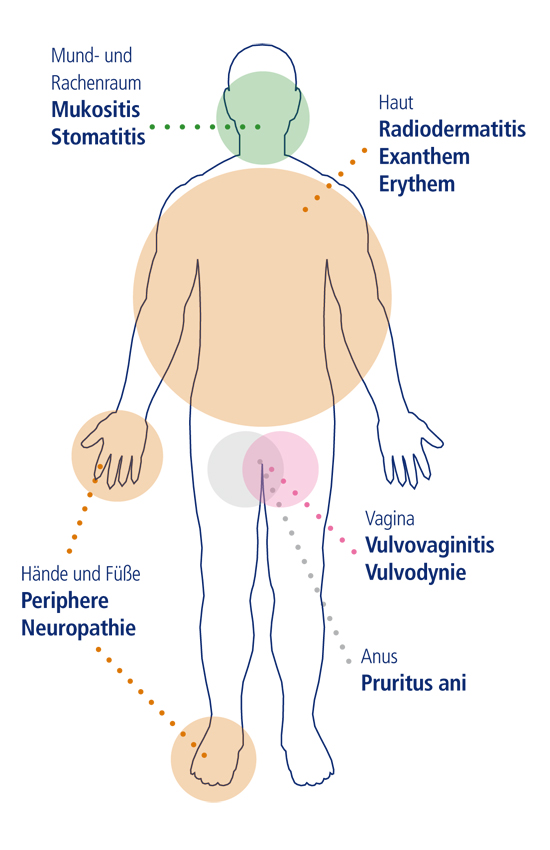
Among the most common side effects of cancer therapy are damage to the skin and mucous membranes. These affect patients' quality of life, as well as the success of the therapy. The aim of cancer therapy is to slow down or even stop the growth of the tumour. This prevents cells from dividing. This is particularly detrimental to tumour cells, but also to healthy body cells. Cells in the skin and mucous membranes are primarily affected.
Side effects in cancer therapy
If the tissue is irritated by therapy, an inflammatory reaction of the skin and/or mucous membrane occurs, which is intensified as a result of the therapy. Inflammation is a fundamentally protective reaction to eliminate damaging stimuli and initiate the healing process. However, an inflammation that becomes chronic exceeds the limits of physiological control and then causes damage. Some of the immediate consequences include: dryness, redness, swelling, burning, pain, and altered sensations.
In fact, chronic inflammatory processes that cause persistent pain trigger the production of lipids that are capable of ending the inflammation. An interesting class of such natural mediators are found in ALIAmides (Autacoid Local Injury Amides), which are composed of fatty acids and ethanolamine. These ALIAmides include the endocannabinoids anandamide and palmitoylethanolamide (PEA). [1]
| Production of PEA is increased by stress | Effect of PEA |
| Through inflammation of the peripheral tissue | Anti-inflammatory |
| Through inflammation of nerve tissue | Neuroprotective |
| Through pain response | Pain-relieving |
The foregoing suggests that PEA maintains cellular homeostasis in the creation of inflammatory processes. It logically follows that pathological situations may arise where endogenous PEA levels are insufficient to limit the resulting damage. In such cases, external administration of PEA to supplement the body's own supply is a realistic therapeutic approach.
With their anti-inflammatory and analgesic effects, cannabinoids are particularly suitable for medical skincare during cancer therapies. The use of the synthetic cannabinoid Adelmidrol has been well-established for a long time. More recently, medical skincare products with endogenous cannabinoids (PEA) have also become available.
The ability of endogenous PEA as a component of the complex immunological regulatory system therefore lies in regulating and limiting inflammation and pain. It thus plays a key role in maintaining the cellular balance of inflammation.
Bendalis's AgainLife products containing cannabinoids (including EvaLife cream, RaLife cream, OraLife mouthwash) provide relief for skin and mucous membrane damage during cancer therapy. The product line is cortisone-free and available without a prescription in pharmacies. Further information can be found at www.againlife.de.
SourcesStephen D. Skaper, Laura Facci and Pietro Giusti, Immunology 2014, doi:10.1111/imm.12170